Handshake
Bringing trust and transparency to vehicle collections
Handshake is a post-sale experience for Motorway that connects sellers and vehicle collection agents, giving both parties a clearer, more consistent way to manage the handover.
Previously, Motorway had limited visibility into what happened when a dealer collected a car. Handshake introduced a connected collection journey, using QR codes, verified check-in and shared vehicle information to help sellers feel more confident and give Motorway greater visibility into the process.
- Role
- Lead Product Designer
- Product
- Motorway Handshake
- Platform
- Web, iOS and android
- Focus
- End-to-end experience
The problem
The customer journey didn't end when the car was sold.
For many Motorway customers, the most uncertain part of selling a car happened after the sale: when a dealer arrived to collect it.
To understand what happened at this critical moment, I joined dealers on vehicle collections and observed the handover first-hand. I watched how drivers inspected vehicles, how issues such as chips were discussed, how price negotiations unfolded, and how payment was handled. This gave me a clearer understanding of the experience from both sides: the dealer collecting the car and the seller handing it over.
It became clear that a vehicle collection was more than a simple handover. It was a high-stakes interaction where unexpected issues could lead to difficult conversations, while both parties needed to understand what had been agreed and what happened next.
Sellers could find themselves negotiating with a professional dealer without easy access to their original vehicle listing, photographs or agreed price. If the price changed or something went wrong, Motorway often had little visibility until a complaint was raised.
The problem affected three groups:
- Sellers needed reassurance, access to their vehicle details and a way to get help during collection.
- Dealers needed reliable access to vehicle information and a consistent way to document issues.
- Motorway needed to understand what happened at the point of handover, rather than relying on reports after the event.
Research highlighted the scale of the problem: 52.8% of collections involved price reductions, while 5.3% resulted in one- or two-star seller reviews.
The opportunity was to make the collection a visible, supported part of the Motorway experience.
The solution
A shared experience for a moment that mattered.
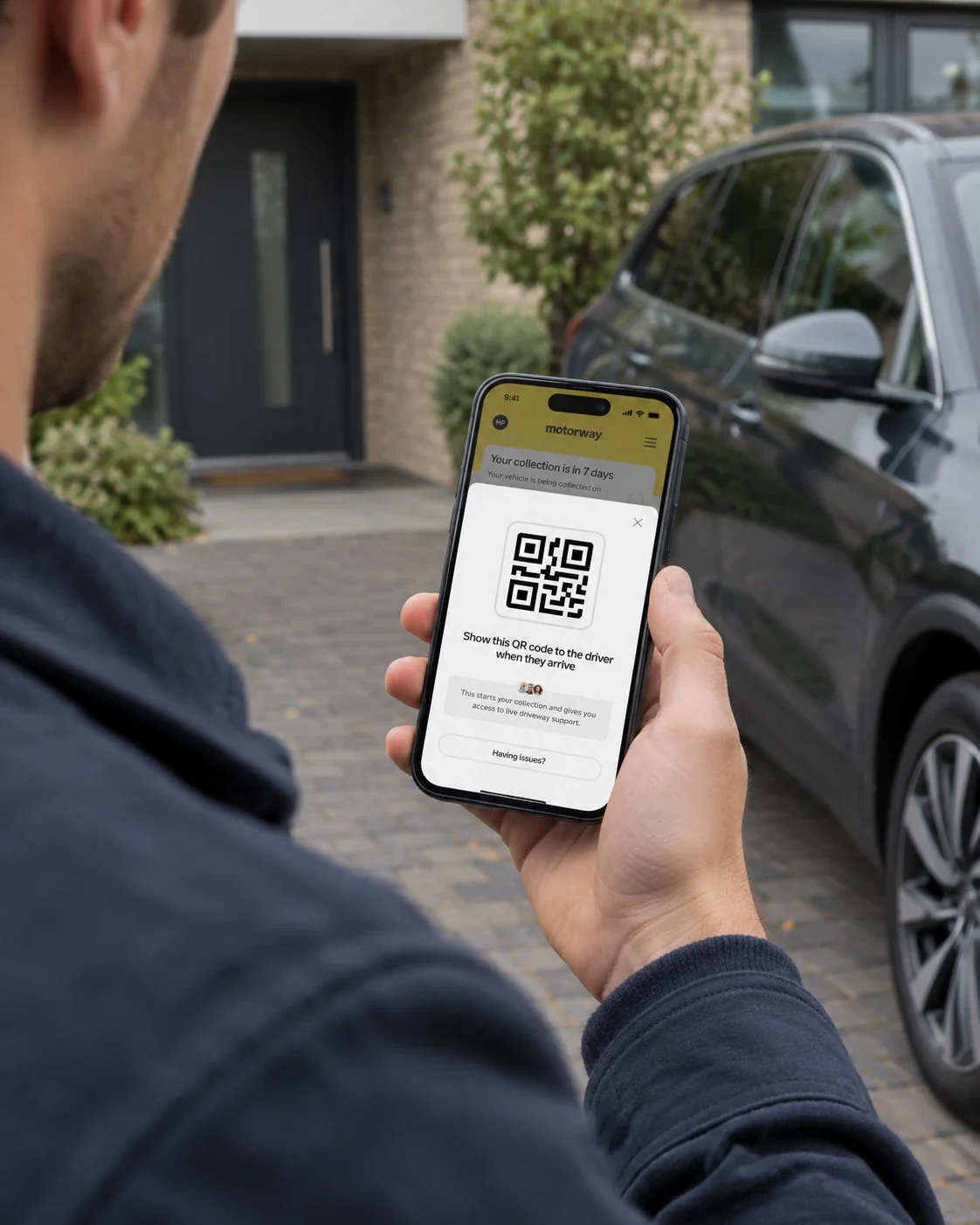
Handshake brought sellers, dealers and Motorway closer together through a lightweight, QR-code-based collection flow.
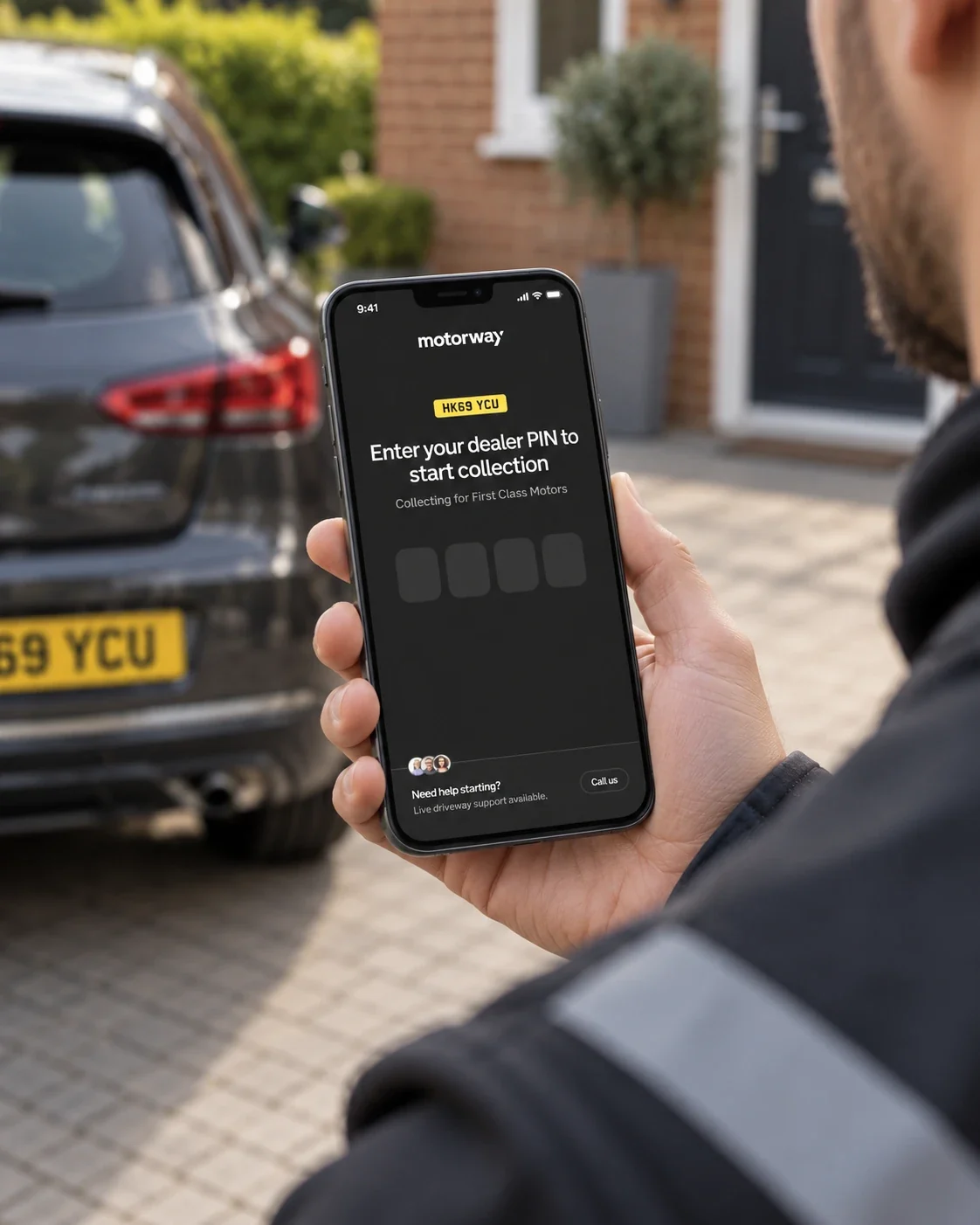
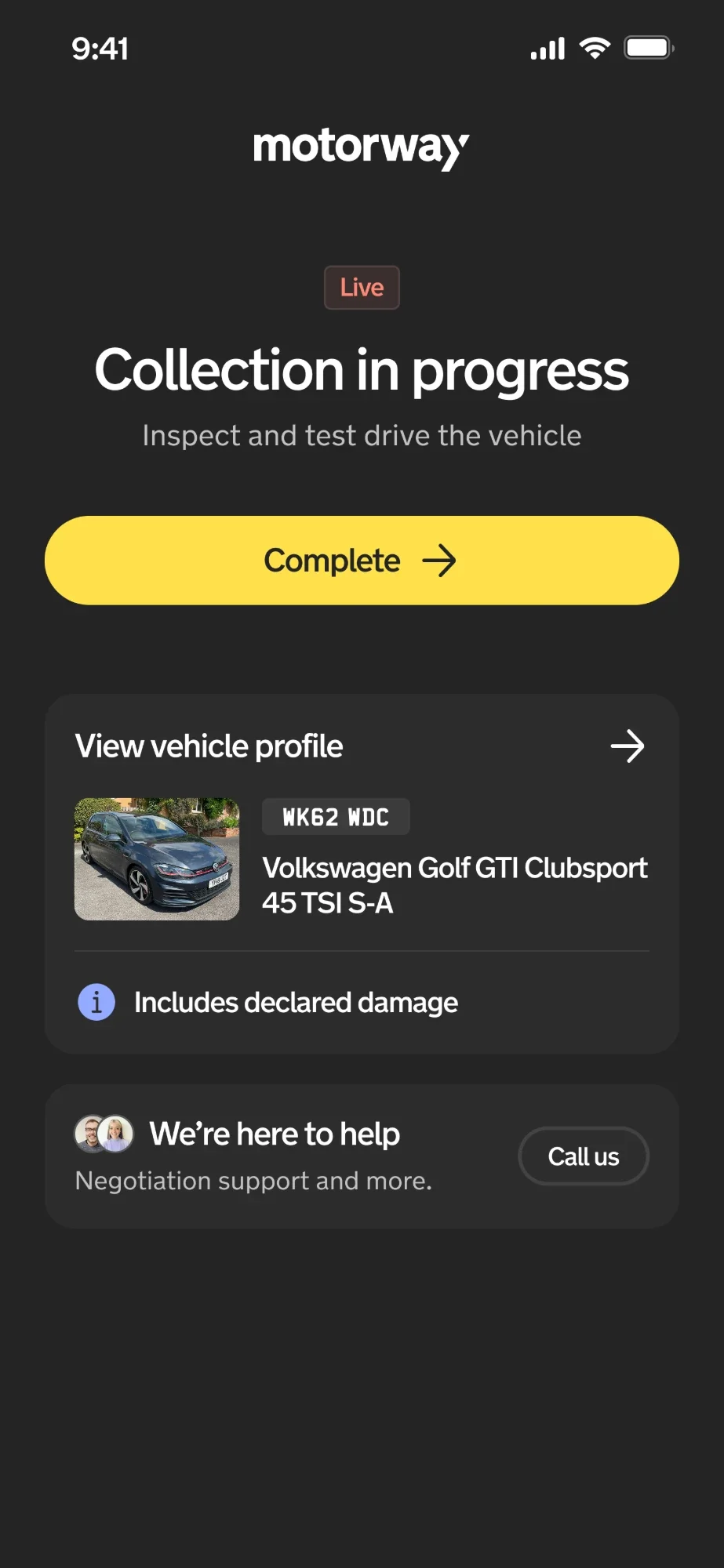
Rather than requiring a separate app download for collection agents, scanning the seller's QR code opened a web experience linked to the transaction. A PIN confirmed the handover, allowing both parties to access relevant vehicle information and giving Motorway a record of the collection starting.
I focused on three core principles:
Make the process clear.
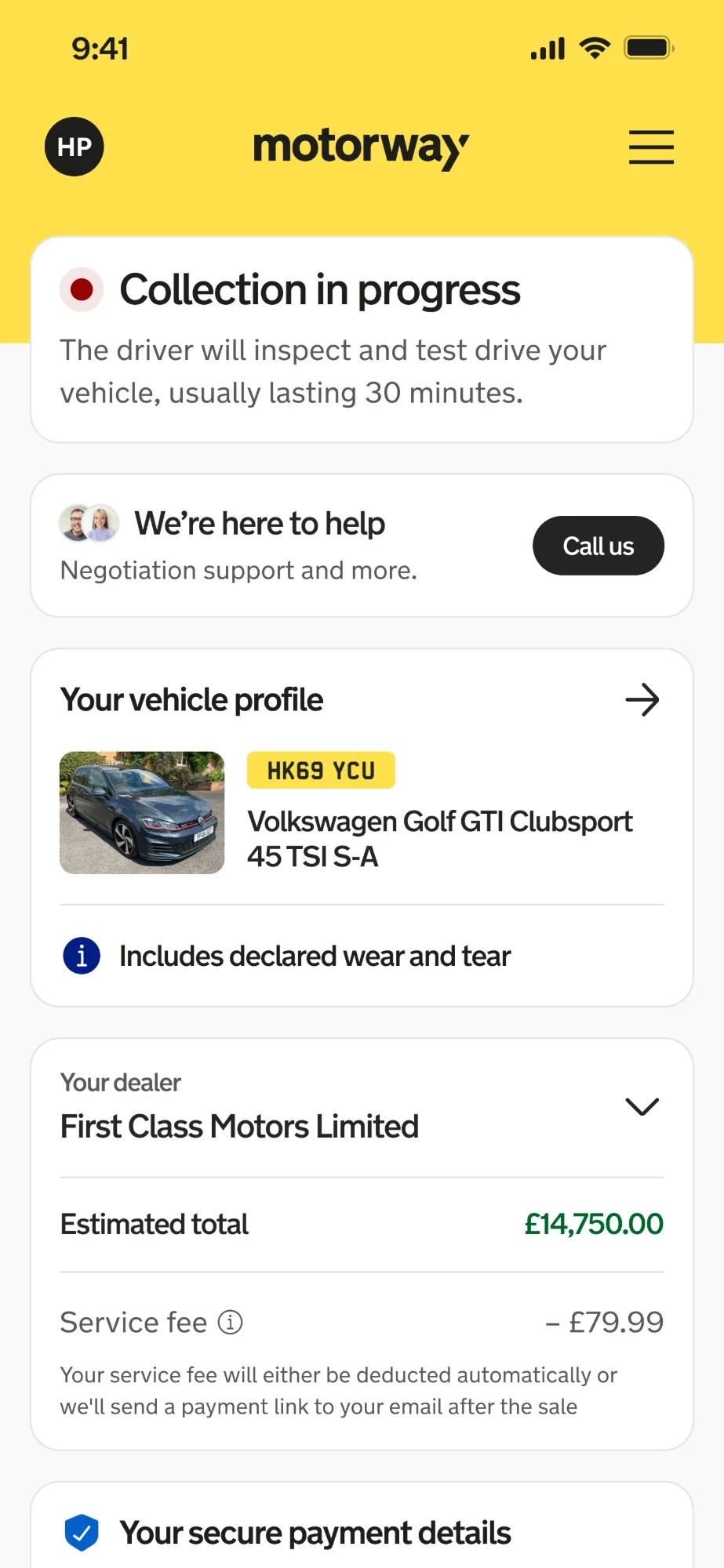
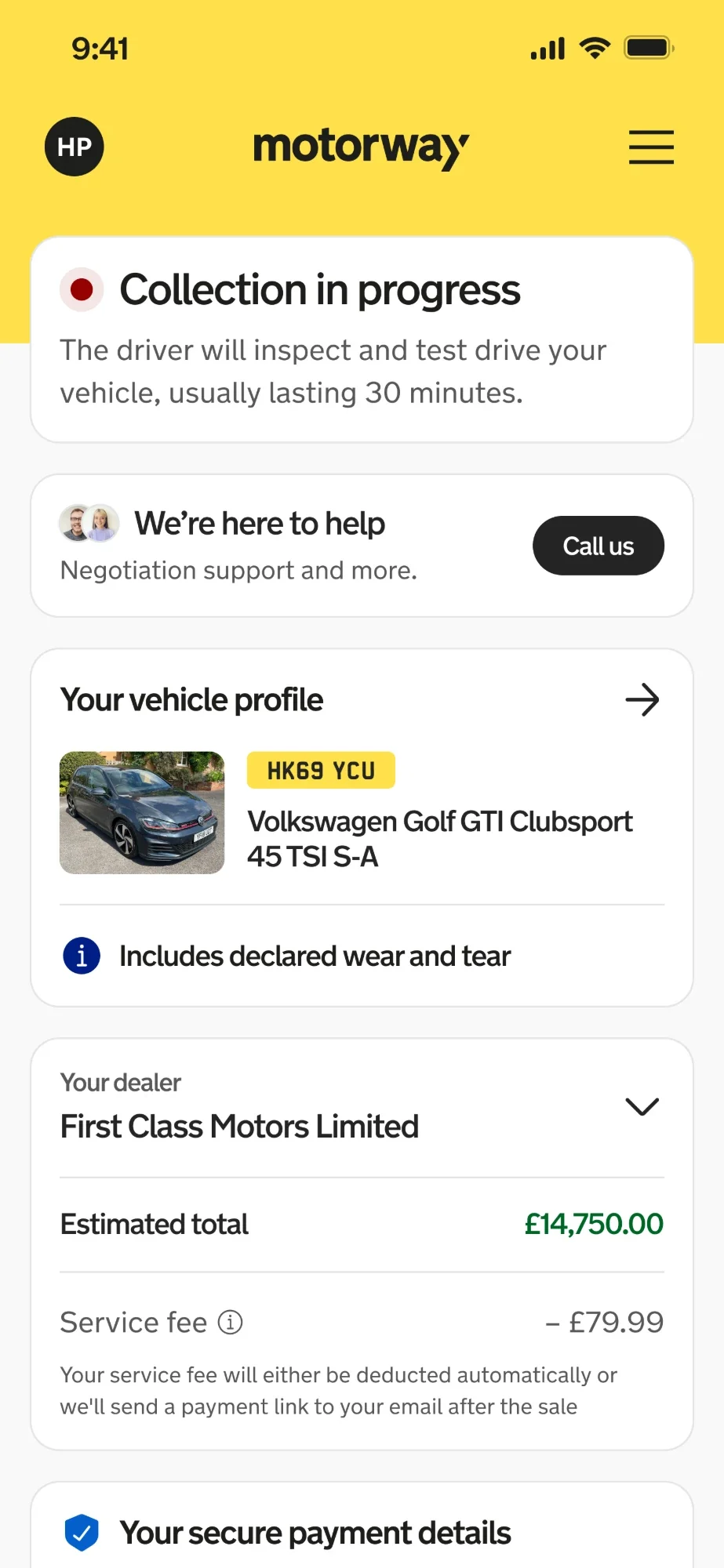
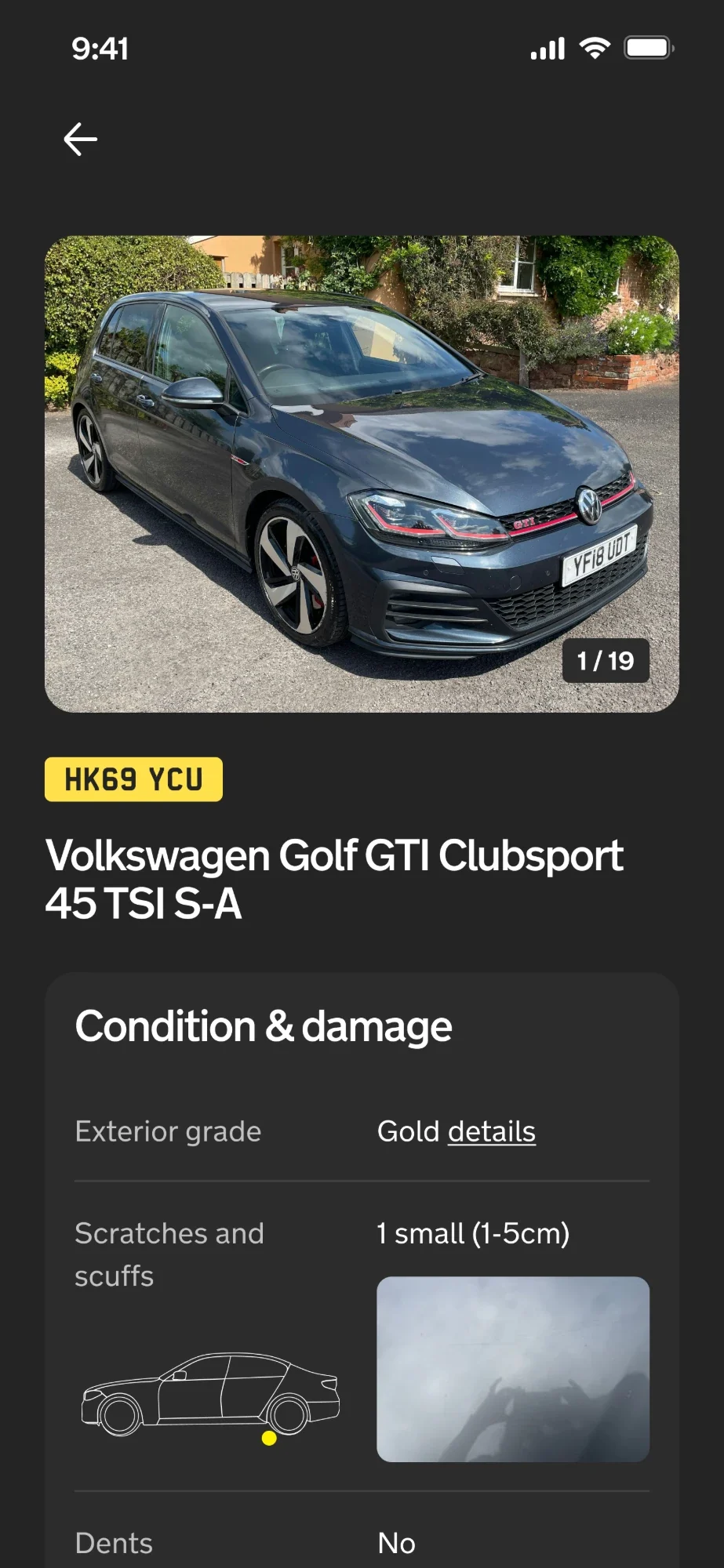
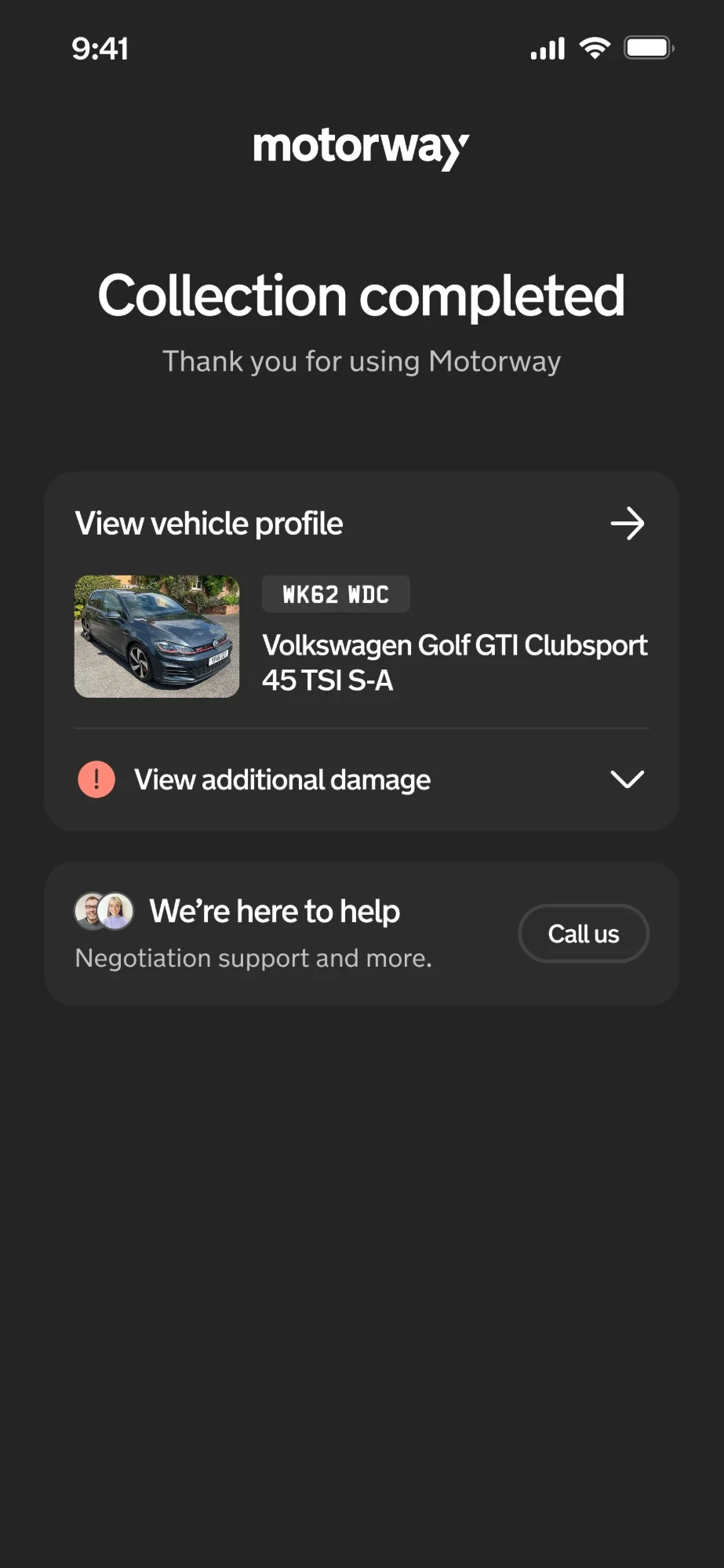
Give sellers and dealers access to the same vehicle profile, including the agreed price and previously disclosed damage, so both parties could work from the same information.
Give sellers confidence and control.
Make the collection status visible and provide a clear route to Motorway support if a seller felt uncomfortable or needed help.
Make the handover accountable.
Record key collection events and outcomes so Motorway could better understand price changes, cancellations and the overall customer experience.
The design & key decisions
Designing for three different users, one shared outcome.
My approach was shaped by what I had observed on the driveway: the need for a straightforward process, shared information and a way to handle unexpected issues without leaving either party uncertain about what had been agreed.
01. Connect the two sides of the transaction
The QR code and PIN created a simple bridge between the seller's existing journey and the dealer's collection experience. The aim was to make the process easy to start, without asking collection agents to navigate a complex new tool.
02. Put the right information in the right place
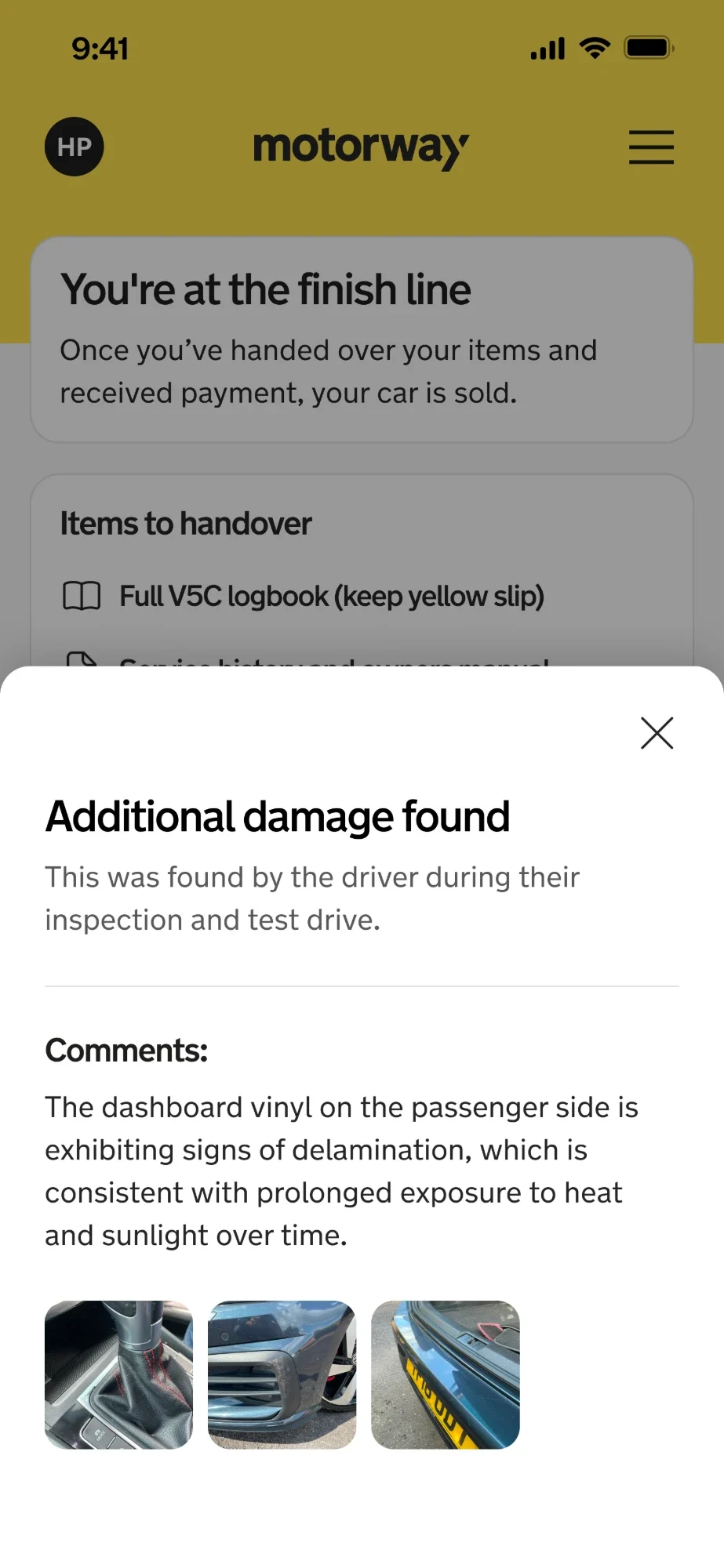
Vehicle details and previously disclosed damage were central to the collection experience. Giving both parties access to this information helped them refer back to what had been declared at the point of sale when discussing the vehicle.
03. Build reassurance into the seller journey
Collection is an infrequent but high-stakes moment for sellers. Clear status updates, accessible support and a more visible process helped make the experience feel less uncertain, without requiring a Motorway representative to be physically present.
04. Design for the real world
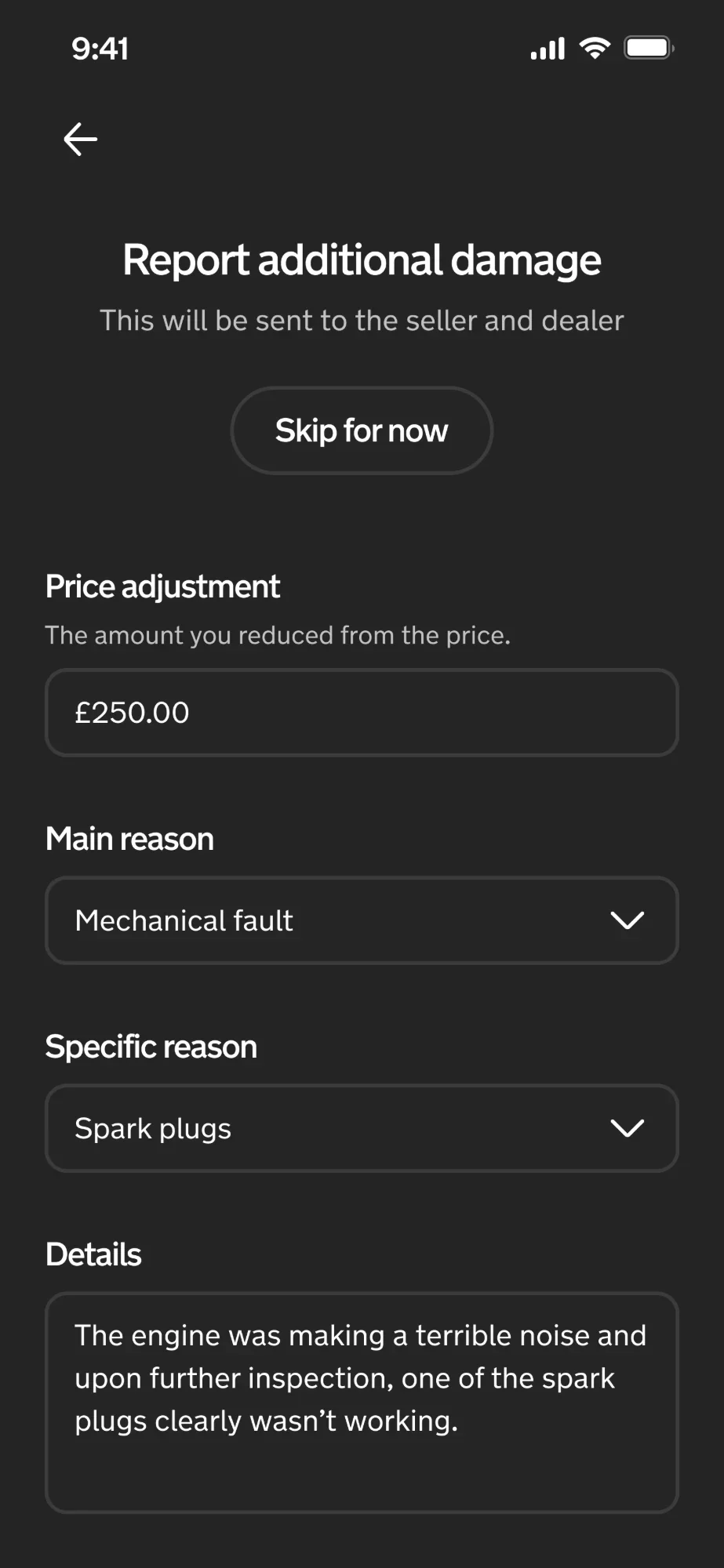
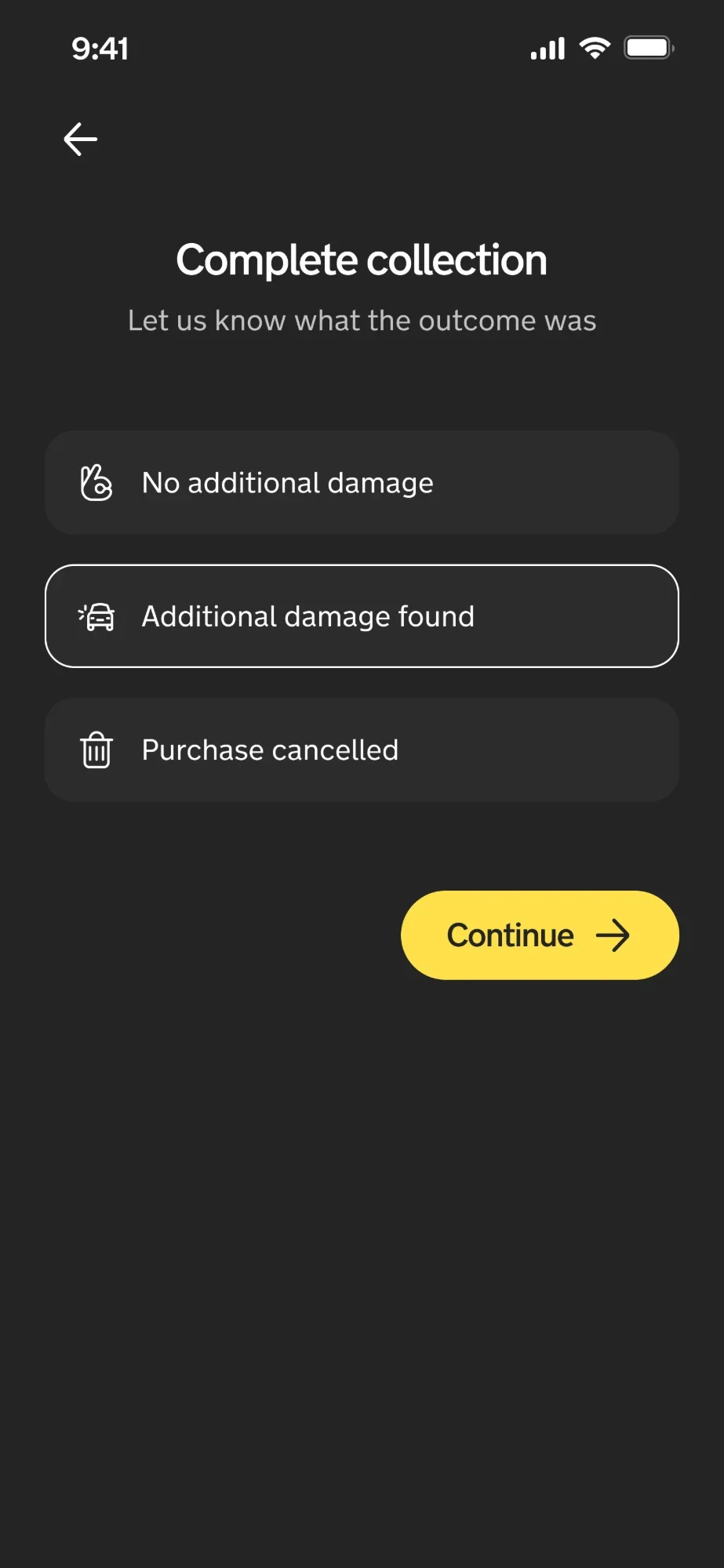
Handshake needed to work across different dealer operations, devices and levels of digital confidence. The experience had to be quick enough to use on a driveway, while still capturing useful information for Motorway. Later iterations also introduced seller-initiated collections and issue reporting, giving sellers a way to record what happened even when a dealer did not complete the expected check-in.
Iteration & delivery
From an initial concept to a product that could scale.
Handshake began as a lightweight MVP, then expanded as the team learned more about adoption and how collections actually worked.
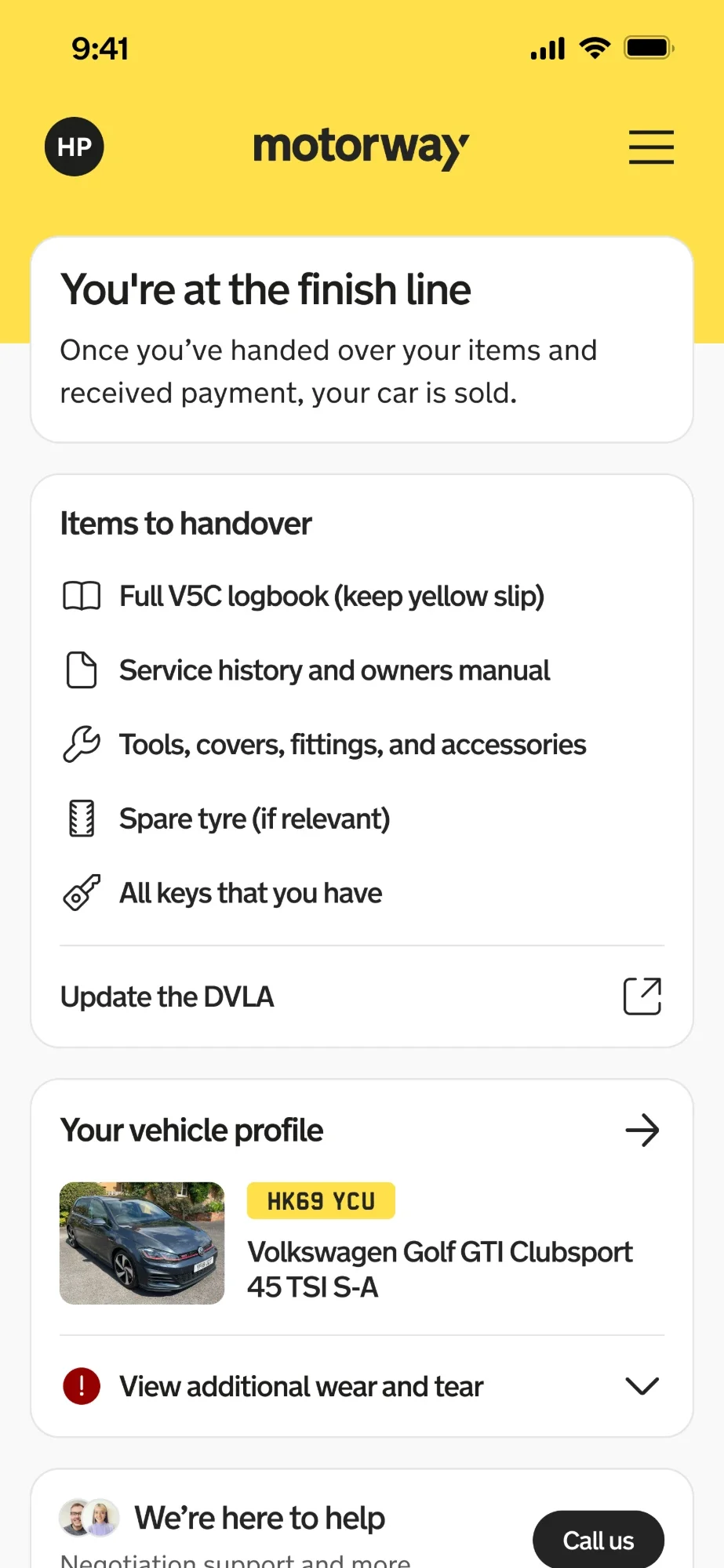
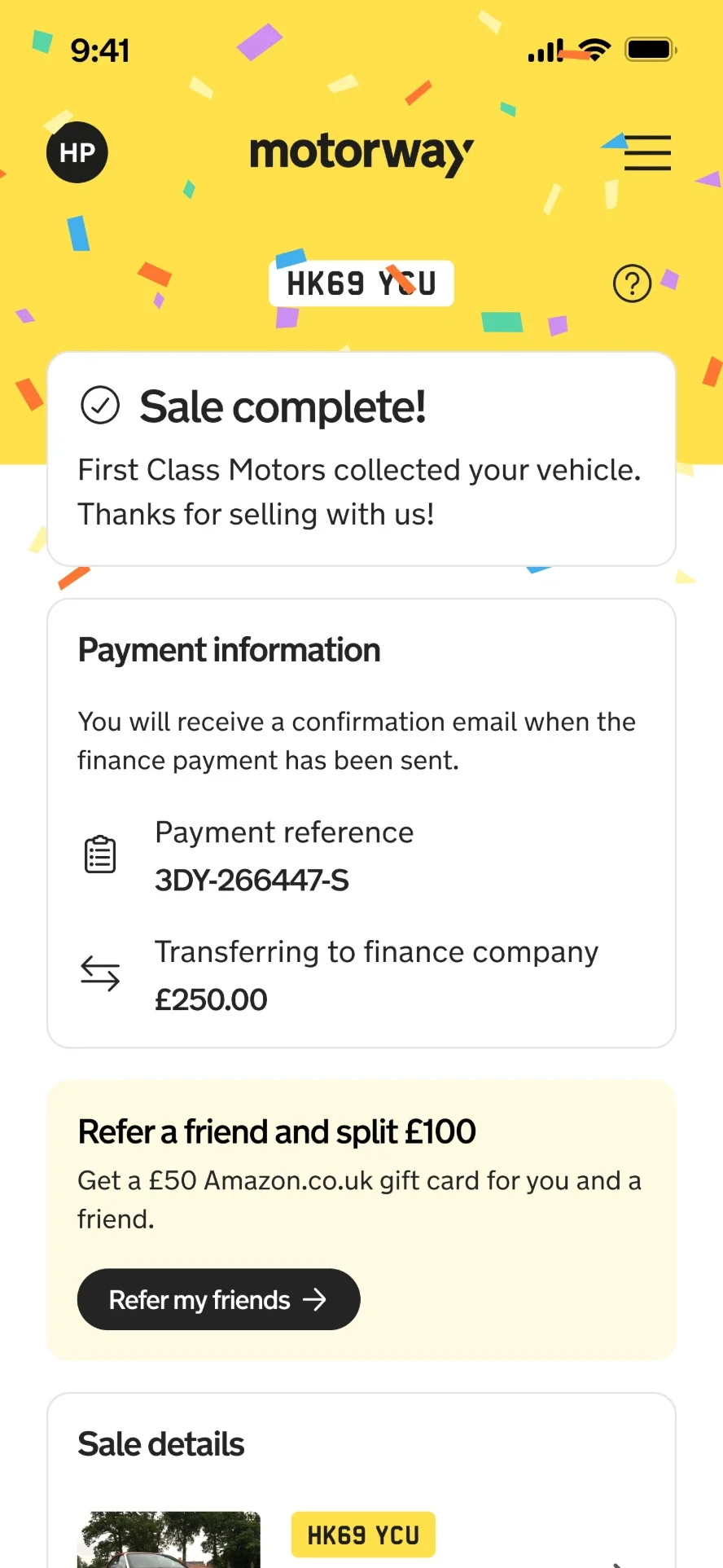
The initial experience focused on QR check-in, shared vehicle information and collection visibility. Subsequent iterations expanded reach through the seller apps, improved discoverability of the QR code, and introduced seller-initiated collection reporting.
One important learning was that building the flow wasn't enough: people also needed to understand when and why to use it. Seller communications, in-product messaging and better placement of the QR code helped establish expectations before collection day.
The work continued to evolve from simply recording a check-in towards capturing the full collection journey, including inspection outcomes and price amendments.
Outcomes & learnings
Turning a blind spot into a more visible journey.
Handshake grew from an initial product into an established part of Motorway's post-sale experience. By Q3 2026, around 1,000 dealers had been activated, and the scan rate had more than doubled over the quarter.
Key results
- ~£1.0M
- Potential annual value
- Estimated value of avoiding around 3,200 non-attendance cancellations a year by closing half the observed cancellation gap.
- 36%
- Fewer cancellations
- Non-attendance cancellations on Handshake collections compared with non-Handshake collections among the same dealers. This was a correlation, not proof that Handshake alone caused the reduction.
- 6.9% → 15.4%
- Scan rate
- Handshake adoption more than doubled during Q3 2026.
- 31%
- Phase 2 dealer activation
- Reached Phase 1 activation levels within six weeks.
- +6
- Percentage points
- Improvement in overall collection visibility quarter on quarter.
The work also revealed where the experience needed to improve. Dealer awareness and adoption remained barriers, and some sellers struggled to find or use their QR code. At a scan rate of around 15%, the effect was not yet clearly visible in overall business metrics, making adoption a key priority for the next phase.
What I took away
Handshake reinforced that good product design isn't just about simplifying an interface. It's about understanding real-world behaviour, designing for multiple users with different incentives, and making the experience useful enough that people adopt it.
The most valuable progress came from treating launch as the beginning of the design process: measuring how people used the product, learning where the journey broke down, and evolving the experience to address those gaps.